Yes, Einstein had Special and General Relativity revolutionizing the way we look at reality. Newton had Gravity, Motion, and Calculus — which became the basis for much of science.
Von Neumann is someone who is usually overlooked, Richard Feynman was my hero for his charisma, diagrams, and incredible (not fully understood by myself) lectures — until I learned about John Von Neumann through the Veritasium video below:
These were some of his most incredible developments:
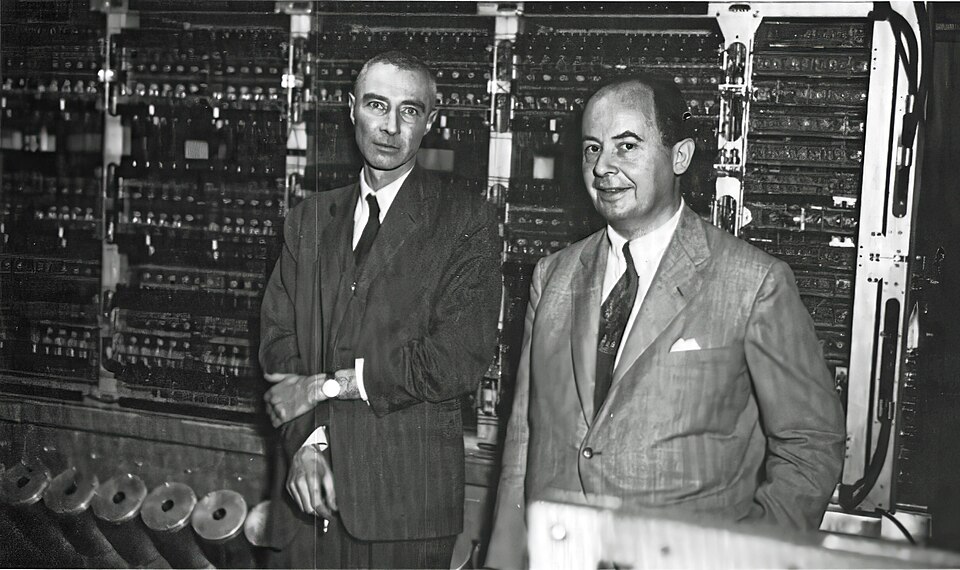
Image 1 – J. Robert Oppenheimer and Von Neumann in 1947
2. Von Neumann Architecture: design of computers to store data and instructions simultaneously, which are used in every computer/cellphone in the present day.

Image 2 – Von Neummann Computer Architecture
This serves as a sort of brain for the computer, bridging all aspects together into 1 general processing area.
3. Game Theory: the foundation for any games of strategy. He applied Game Theory broadly, most notably the Minimax Theorem (1928) — stating that one should pick the strategy that gives the best result under the worst-case scenario (worst scenario planning = best outcome):

Image 3 – Minimax Theorem Modeling for Chess (simple)
This set the foundation for AI game strategy, economic models, cybersecurity strategy and countless strategic methodologies used to this day.
4. Quantum Mechanics: he established the Dirac-von Neumann axioms, which I am going to attempt to explain without making a fool of myself:
Axioms are the foundational truths under which this kind of physics works. These are important because Quantum Mechanics works by observing atoms which live in very unstable states.
A better way of understanding this is by picturing atoms as fuzzy tennis balls instead of the classic and stupidly simplified:

In reality, the electrons (little white, negatively charged dots flying outside of the atom) behave more like this:

So yeah, it looks more like this:

Von Neumann essentially helped in finding ways to track these movements at the atomic level.
I found that the more one reads (or watches) things that interest them, the more unexpected heroes and inspirations one encounters — in turn inspiring one’s own life.
Sources:
 TheWhyLab
