The earliest computers were our brains, the modern blueprint behind the familiar, silicon-based computers on our desktops and in our pockets.
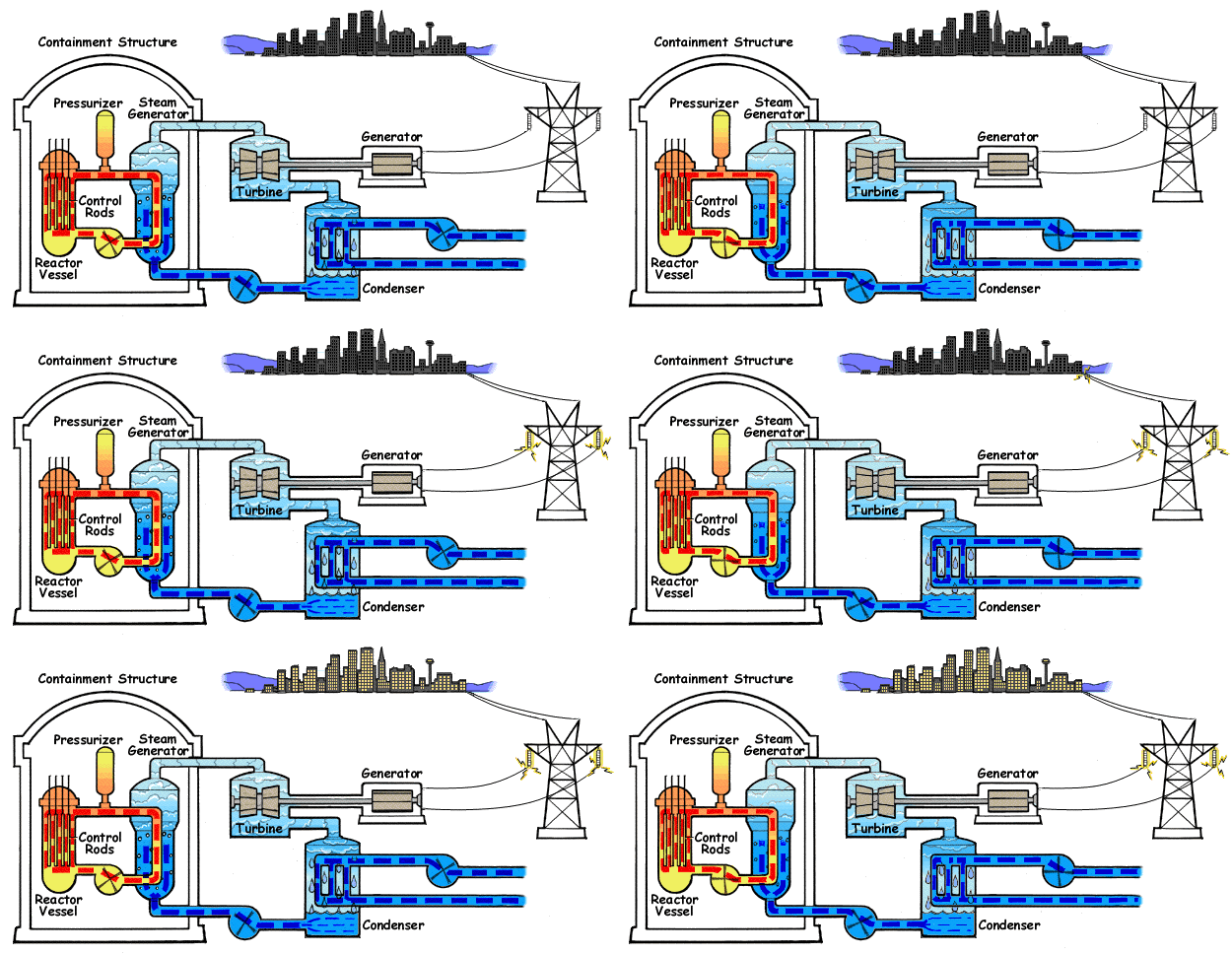
Modern computers are powered like this: Carbon (fuel) -> heat (boiling water) -> steam -> turbine -> generator -> electricity -> transmission lines -> device (computer)
Whereas human computers: Food ->ATP (via mitochondria) -> sodium-potassium pump -> ion gradients -> voltage-gated ion channels -> neural signaling -> brain function

Think about the scale, miles and tons of steel and material to power these machines, versus a couple pounds to compute things.
The brain is far more power efficient, it runs on 20 watts (enough to power a small lightbulb) –> 10^14 to 10^15 operations/second.
A modern laptop requires 50-100 watts, a modern top-end AI GPU –> 10^15 to 10^16 operations/second.
While the computer is much more exact, the brain is 1,000 to 10,000 times more efficient on a per watt basis.
People in AI and hardware are trying to use such a concept, namely Cortical Labs (https://corticallabs.com/), who are applying this concept and have created their own biological computers with neurons that can survive up to 6 months.
In theory (not yet), neuron power computers would be much more adaptive and power efficient than our current, silicon-powered computing systems.
Below, you can see their systems learning to play pong:
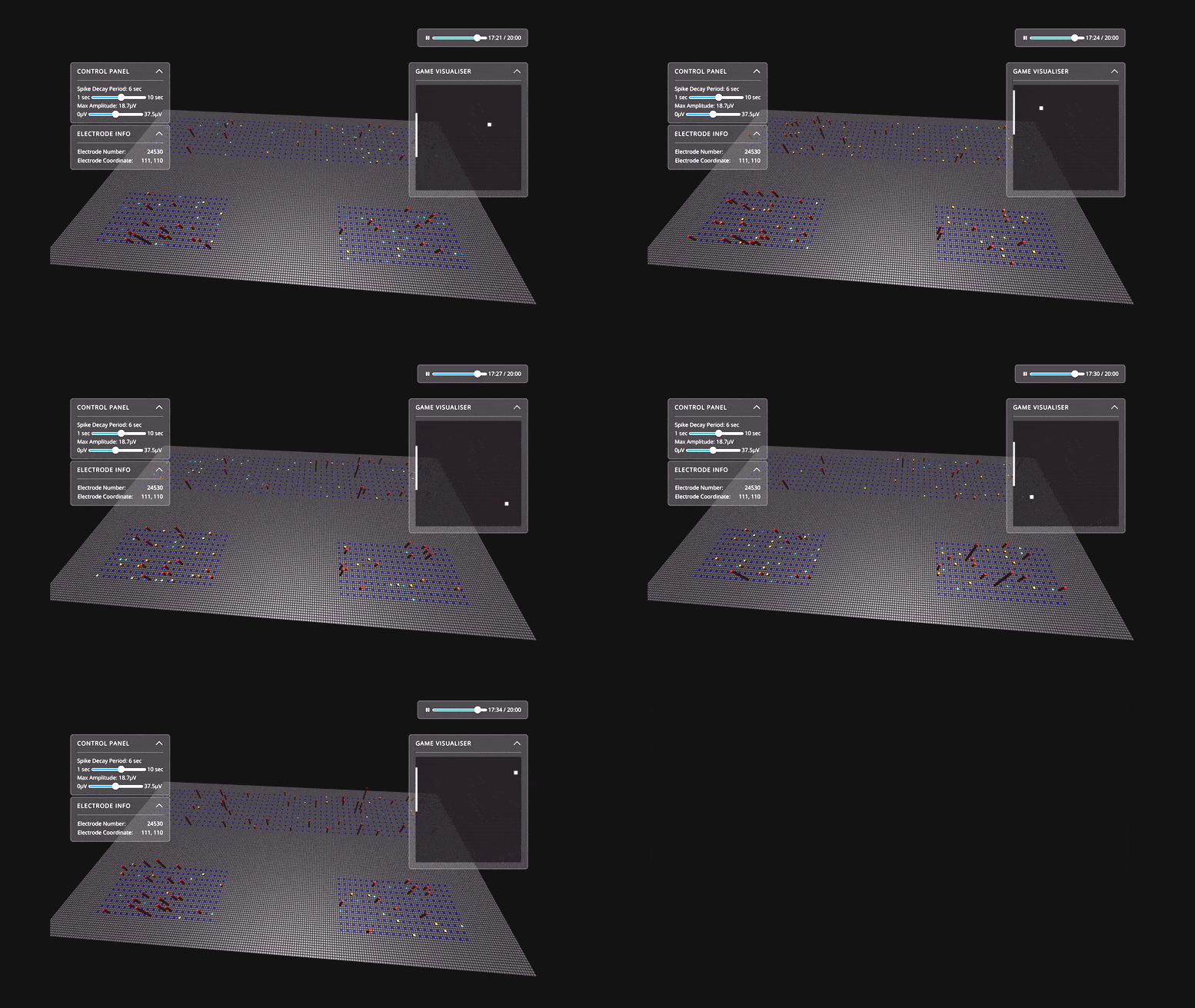
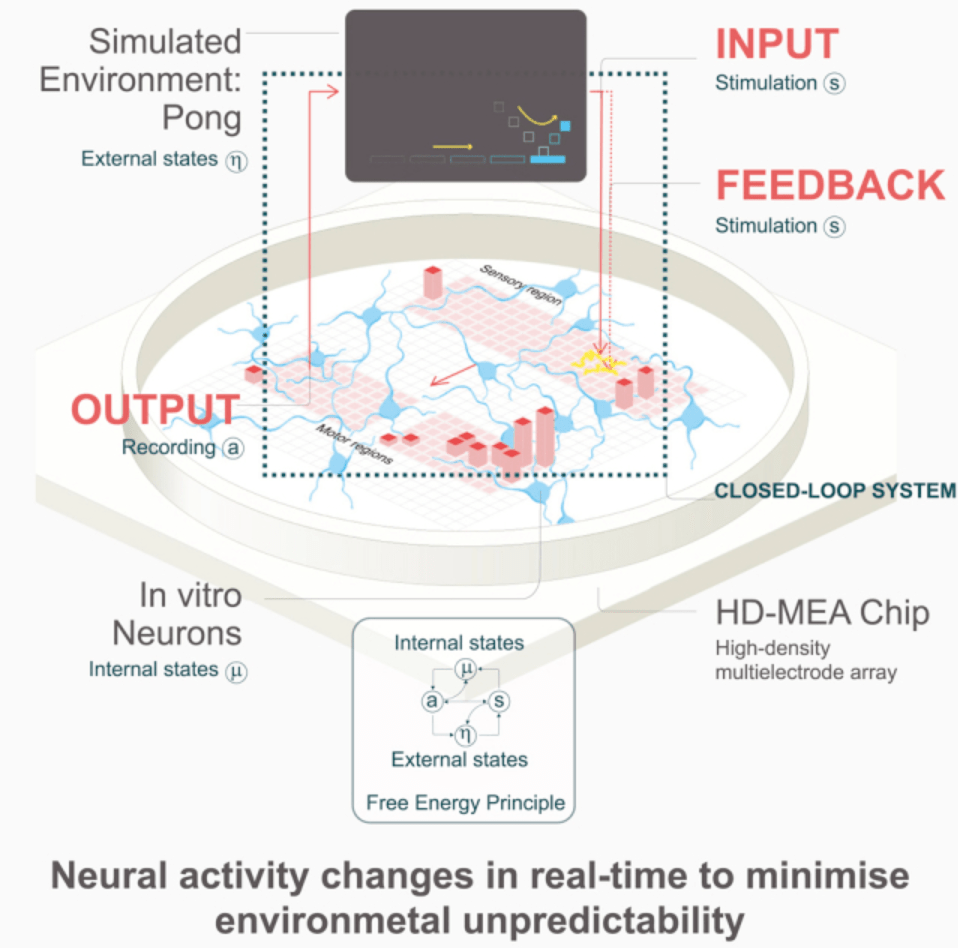
Figure: Kagan et. Al 2022, In vitro neurons learn and exhibit sentience when embodied in a simulated game-world.
This a nascent field, but is fascinating and feels borderline sci-fi, while ethically interesting, and who knows what role these systems will play in our future (if any).
Sources:
Kagan BJ, Kitchen AC, Tran NT, Habibollahi F, Khajehnejad M, Parker BJ, Bhat A, Rollo B, Razi A, Friston KJ. In vitro neurons learn and exhibit sentience when embodied in a simulated game-world. Neuron. 2022 Dec 7;110(23):3952-3969.e8. doi: 10.1016/j.neuron.2022.09.001. Epub 2022 Oct 12. PMID: 36228614; PMCID: PMC9747182.
 TheWhyLab